Can I Visit Varanasi After the Golden Triangle Tour?
September 21, 2026
Can I Visit Varanasi After the Golden Triangle Tour?
Yes, you can visit Varanasi after completing the Golden Triangle Tour, and it can be an excellent way to extend your India holiday. The Golden Triangle connects Delhi, Agra, and Jaipur, offering a combination of history, architecture, royal heritage, and famous monuments. Varanasi provides a completely different experience, centered around the sacred Ganges, ancient ghats, temples, spirituality, and traditional culture.
Many travelers choose to finish their Golden Triangle journey in Jaipur and then continue to Varanasi by flight or train. This route allows you to experience two very different sides of India without having to return to Delhi immediately.
A well-planned Golden Triangle Tour with Varanasi can take approximately 8 to 10 days, depending on how much time you spend in each destination. The ideal transportation depends on your budget, schedule, and preferred travel style.
Why Visit Varanasi After the Golden Triangle?
The biggest advantage of adding Varanasi after the Golden Triangle is the contrast between the destinations.
Delhi is known for its historic monuments, markets, and mixture of old and modern culture. Agra is famous for the Taj Mahal and Mughal architecture, while Jaipur offers magnificent forts, palaces, colorful bazaars, and Rajasthan's royal heritage.
Varanasi offers something entirely different. The city is associated with Hindu spirituality, sacred rituals, ancient temples, and daily life along the Ganges.
After several days of sightseeing around monuments and palaces, Varanasi provides an opportunity to slow down and experience another important part of India's cultural heritage.
How Many Days Do You Need?
A standard Golden Triangle itinerary can take around 5 to 6 days. Adding 2 or 3 days in Varanasi creates a comfortable overall trip of approximately 8 to 10 days.
A sample itinerary could look like this:
- Day 1: Arrive in Delhi and explore Old Delhi
- Day 2: Delhi sightseeing
- Day 3: Delhi to Agra and visit the Taj Mahal
- Day 4: Agra to Jaipur via Fatehpur Sikri
- Day 5: Jaipur sightseeing
- Day 6: Jaipur sightseeing or leisure day
- Day 7: Jaipur to Varanasi
- Day 8: Varanasi sightseeing and Ganga Aarti
- Day 9: Sunrise boat ride and departure
If you have limited time, you can shorten the Golden Triangle portion or spend only two nights in Varanasi.
Travel from Jaipur to Varanasi
For most travelers, the most important transportation decision comes after Jaipur.
Jaipur and Varanasi are separated by a considerable distance, making a road journey relatively long. If your priority is saving time, flying is generally the most convenient choice.
Depending on the date, flights may be direct or may require a connection. Flight schedules change, so check the current timetable when planning your trip.
Trains are another option. India's extensive railway network connects major cities, and traveling by train can be an interesting part of the experience. However, journey times can be much longer than flying.
A private car is generally more suitable for the Delhi-Agra-Jaipur portion than for Jaipur to Varanasi because of the distance involved.
What to See in Varanasi
Varanasi has numerous attractions, but the city's atmosphere is as important as its individual sights.
The ghats along the Ganges are the heart of the city. Each ghat has its own history and purpose, and walking along the river provides an opportunity to observe daily life and traditional ceremonies.
Dashashwamedh Ghat is particularly well known for the evening Ganga Aarti. Assi Ghat is another popular location and is often visited around sunrise.
The Kashi Vishwanath Temple is one of the most important religious sites in Varanasi. Because temple access procedures and security rules can change, check current visitor requirements before your trip.
Sarnath, located near Varanasi, is another important attraction. It is associated with the Buddha's first sermon and is an important Buddhist pilgrimage destination.
Experience a Sunrise Boat Ride
One of the most memorable activities in Varanasi is an early morning boat ride on the Ganges.
As the sun rises, the ghats begin to come alive. You may see people bathing, praying, practicing yoga, preparing for the day, or performing traditional rituals.
The boat provides a different perspective of the riverfront and allows you to see several ghats without walking the entire riverfront.
Early morning is also generally more comfortable than the hotter parts of the day, particularly during warmer months.
Photography can be rewarding, but visitors should always respect people engaged in religious activities. Avoid photographing individuals closely without permission.
Experience the Ganga Aarti
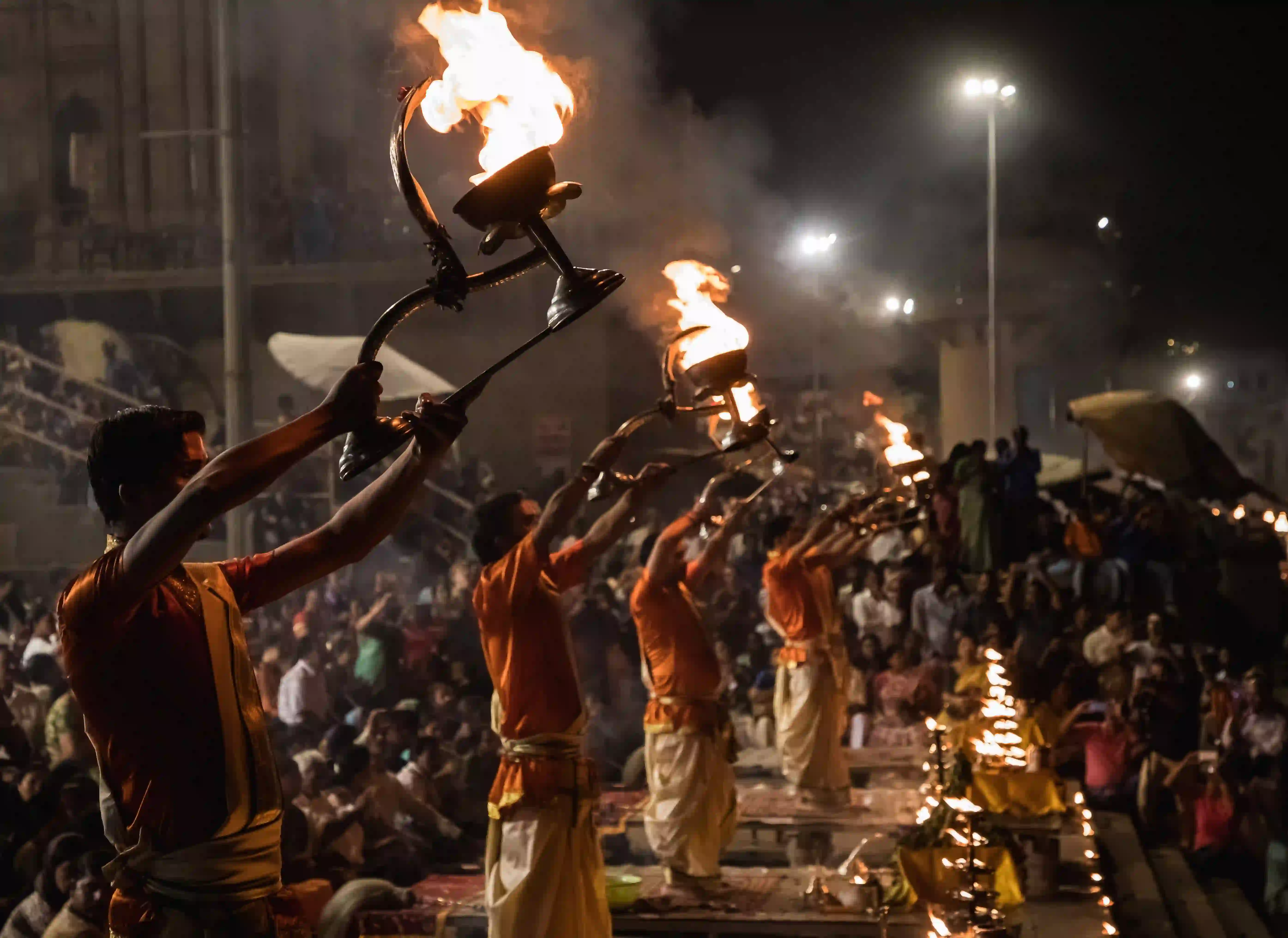
The evening Ganga Aarti is one of Varanasi's most recognized experiences.
The ceremony takes place along the river and includes lamps, prayers, chanting, and traditional rituals. Large numbers of visitors gather around the ghats or watch from boats.
If you want to watch from the riverfront, arrive early because popular viewing areas can become crowded.
A boat ride during the ceremony offers another perspective, but make sure you follow the instructions of your boat operator and local authorities.
Remember that the Ganga Aarti is a religious ceremony rather than simply a tourist performance. Visitors should behave respectfully throughout the event.
Golden Triangle and Varanasi Transportation
Transportation should be planned before starting your journey because each part of the route has different requirements.
For Delhi, Agra, and Jaipur, a private chauffeur-driven car is a popular choice. It allows you to travel directly between cities and make sightseeing stops along the way.
The Delhi-to-Agra journey is relatively straightforward, while Agra-to-Jaipur can include a stop at Fatehpur Sikri.
Once you reach Jaipur, consider switching to a domestic flight for Varanasi if your schedule is limited.
If you enjoy train travel, you can compare available rail services between Jaipur and Varanasi. Consider the total journey time before making your choice.
Best Time to Visit Varanasi After the Golden Triangle
The cooler months from October through March are popular for visiting the Golden Triangle and Varanasi.
During this period, daytime temperatures are generally more comfortable for sightseeing. Winter mornings in northern India can sometimes be foggy, however, and fog can affect road, rail, and air transportation.
November through February can be particularly busy, so hotels and transportation should be reserved in advance.
March and early April can also be pleasant, although temperatures begin to rise.
The summer months can be very hot, especially in Delhi, Agra, and Jaipur. If traveling during hot weather, schedule outdoor sightseeing in the morning or late afternoon.
Where to Stay in Varanasi
Your choice of accommodation can significantly affect your Varanasi experience.
Staying near the ghats provides easy access to the river and allows you to explore the area on foot. However, many streets near the ghats are narrow, and vehicles may not be able to reach your hotel entrance.
Some travelers prefer hotels in areas with easier road access. These can be more convenient if you have heavy luggage or are traveling with family.
Before booking, check how close your hotel is to the nearest vehicle-accessible road and whether the property provides luggage assistance.
Is Varanasi Suitable for Families?
Yes, families can visit Varanasi, but the experience can be different from conventional tourist destinations.
The city can be crowded, noisy, and busy, particularly around the major ghats. Parents traveling with children should keep a close eye on them in crowded areas.
A private guide can make the experience easier by explaining the history and cultural significance of the city.
Families should also plan rest periods rather than filling every hour with sightseeing.
Is Varanasi Suitable for Senior Travelers?
Senior travelers can visit Varanasi, but mobility should be considered when planning accommodation and activities.
The area around the ghats includes steps and uneven surfaces. Some narrow lanes can also be difficult for people with limited mobility.
A private car can make transfers easier, although vehicles cannot access every area around the riverfront.
For senior travelers, staying somewhere with convenient road access and arranging assistance with luggage can make the trip more comfortable.
What to Pack for the Trip
Packing for a Golden Triangle and Varanasi itinerary is relatively simple.
Comfortable walking shoes are essential because you will likely spend significant time walking around forts, monuments, markets, and ghats.
Lightweight clothing works well during warmer months, while layers are useful during the cooler winter season.
Pack sunscreen, sunglasses, a hat, personal medicines, and a reusable water bottle. A small backpack or day bag is useful for sightseeing.
When visiting temples and religious sites, modest clothing is recommended. Some places may have specific dress or entry requirements, so check the rules before visiting.
How Much Does the Trip Cost?
The cost of a Golden Triangle Tour with Varanasi depends on your travel style.
Budget travelers can choose economical hotels, trains, and local transportation. Mid-range travelers may prefer comfortable hotels, private transfers, and a domestic flight between Jaipur and Varanasi.
Luxury travelers can choose premium hotels, private guides, chauffeur-driven vehicles, and upgraded flights.
Your budget should also account for entrance tickets, meals, guides, airport transfers, local transportation, and optional experiences such as boat rides.
Booking hotels and flights early can sometimes provide more choices, particularly during the busy winter season.
Common Planning Mistakes
One of the most common mistakes is trying to complete the entire trip too quickly.
Although it is possible to visit Delhi, Agra, Jaipur, and Varanasi within a week, a rushed schedule leaves little room for unexpected delays or relaxed exploration.
Another mistake is assuming that Varanasi is similar to the Golden Triangle destinations. It has a very different atmosphere and should be approached as a cultural and spiritual experience rather than simply another sightseeing stop.
Travelers should also avoid scheduling a flight immediately after a long road or train journey without allowing enough time for delays.
Finally, remember that religious sites and ceremonies require respectful behavior. Follow local instructions and ask permission before photographing people.
Should You Visit Varanasi Before or After the Golden Triangle?
Both options are possible, but visiting Varanasi after the Golden Triangle can be convenient for travelers who begin their trip in Delhi and travel through Agra and Jaipur.
The route creates a natural progression from Delhi to Agra, then Jaipur, followed by Varanasi.
Another advantage is that Varanasi can be the final major destination before flying home, depending on your international or domestic flight arrangements.
However, your ideal order ultimately depends on available flights, train schedules, hotel prices, and your arrival and departure airports.
A Practical 9-Day Itinerary
A nine-day journey provides enough time to experience the major highlights without making every day overly busy.
Spend the first two days in Delhi, exploring both Old Delhi and New Delhi.
On the third day, travel to Agra and visit the Taj Mahal and Agra Fort.
On day four, continue to Jaipur, stopping at Fatehpur Sikri if time allows.
Spend days five and six exploring Jaipur's Amber Fort, City Palace, Hawa Mahal, Jantar Mantar, markets, and other attractions.
On day seven, fly from Jaipur to Varanasi.
Spend day eight exploring the ghats, taking a morning boat ride, visiting selected temples, and experiencing the evening Ganga Aarti.
On day nine, enjoy a relaxed morning before continuing to your next destination or airport.
This schedule can be adjusted depending on your interests and transportation arrangements.
Why This Combination Creates a Unique India Trip
The Golden Triangle introduces travelers to some of India's most famous historical landmarks. Varanasi then provides a completely different cultural perspective.
In Delhi, you can explore centuries of political and architectural history. Agra highlights Mughal architecture, while Jaipur showcases Rajasthan's royal heritage.
Varanasi shifts the focus toward religious traditions, riverfront life, temples, rituals, and ancient cultural practices.
This variety is the main attraction of combining the destinations. Rather than visiting several cities with similar sightseeing experiences, you encounter distinctly different environments and traditions.
Final Thoughts
Visiting Varanasi after the Golden Triangle is a practical way to extend your India journey and experience a very different side of the country. The combination works particularly well when you use road transportation between Delhi, Agra, and Jaipur and then fly or take a suitable train to Varanasi.
Allow at least two days in Varanasi if possible, and plan your major activities around the sunrise boat ride and evening Ganga Aarti.
A carefully planned Golden Triangle Tour with Varanasi can combine historic monuments, royal architecture, spiritual traditions, local markets, and unforgettable riverfront experiences in one journey.
Whether you are a first-time visitor to India, a couple, a family, or a group of friends, adding Varanasi after the Golden Triangle can create a diverse and culturally rich itinerary.
Frequently Asked Questions
Can I visit Varanasi after completing the Golden Triangle?
Yes. Varanasi can be added after visiting Delhi, Agra, and Jaipur. Jaipur is often a convenient point from which to continue to Varanasi by flight or train.
How many days should I spend in Varanasi?
Two full days are a good starting point for first-time visitors. Three days allow you to explore more slowly and include Sarnath without rushing.
Is it better to fly or take a train to Varanasi?
Flying usually saves considerable travel time, while trains can be appealing to travelers who enjoy rail journeys. Compare current schedules and journey times before booking.
What is the main attraction in Varanasi?
The Ganges and its historic ghats are central to the Varanasi experience. The morning boat ride and evening Ganga Aarti are particularly popular experiences.
What is the best time for a Golden Triangle and Varanasi trip?
October through March is generally popular because of more comfortable sightseeing conditions, although winter fog and peak-season crowds should be considered.