Full Day Jaipur City Tour by Car – Complete Travel Guide
February 24, 2026
Full Day Jaipur City Tour by Car – Complete Travel Guide
Jaipur is a living museum of royal legacy, architectural genius, vibrant streets, and enduring customs. It is more than simply another city on India's map. Jaipur, sometimes referred to as the Pink City, offers a unique fusion of history and energy, with centuries-old palaces coexisting with contemporary cafés and imposing forts towering over busy bazaars. A Full Day Jaipur City Tour by Car – Complete Travel Guide is still one of the most practical, cosy, and fulfilling methods to see Rajasthan for visitors who wish to get a taste of the state in a single day.
With a car-based tour, sightseeing becomes a leisurely and engaging experience. You can just relax, enjoy the journey, and take in Jaipur's splendour at your own leisure rather than stressing over figuring out new streets, haggling with local transportation, or according to strict deadlines. A full-day schedule lets you see the city's most famous sights while still making time for spontaneity and cultural exploration, whether you're visiting for the first time or coming back to rediscover its beauty.
Why Pick a Car Tour of Jaipur for the Entire Day?
In Jaipur, driving provides unparalleled flexibility. From hilltop forts to inner-city palaces, the city's attractions are dispersed over many locations, and a private vehicle guarantees seamless transitions between them. Compared to strict group tours, the air-conditioned comfort, the flexibility to stop whenever you want, and the option to personalise your itinerary make for a considerably better experience.
Jaipur's geography and temperature make an automobile journey especially worthwhile. Walking lengthy distances between sites can rapidly become taxing due to Rajasthan's harsh sun, especially during the warmer months. You can concentrate on what really matters—the sights, stories, and atmosphere—by using a car to reduce tiredness and maximise enjoyment.
There is a psychological benefit in addition to the practical one. Private travel encourages a closer relationship with the environment. You are not constrained by someone else's timetable or hurried by a crowd. Every stop becomes more intimate, each moment more significant.
Beginning the Day: Jaipur's Crown Jewel, Amber Fort
Without Amber Fort, no Jaipur itinerary feels complete. Images of Rajput grandeur are instantly conjured up by this beautiful edifice, which is perched dramatically on craggy slopes. The sight of the ochre walls shining against the desert terrain, reflected by the tranquil Maota Lake below, is worth the drive up the twisting road to the fort.
The scale and artistry of Amber Fort are captivating. Courtyards open into elaborate halls, sophisticated mirror work turns rooms into glistening wonders, and delicate carvings grace archways. One of the attractions is still the Sheesh Mahal, often known as the Mirror Palace, where thousands of tiny mirrors reflect light in stunning patterns.
Exploring the fort is akin to entering a regal story. There are murmurs of kings, queens, feasts, and plans in every hallway. These stories can be brought to life by an informed guide, who can also highlight historical background and subtle meaning that could otherwise be missed.
The Floating Vision: Jal Mahal
The road passes Jal Mahal, one of Jaipur's most photographed sights, on the way back from Amber Fort. The palace is almost unreal as it rises smoothly from the middle of Man Sagar Lake, a symmetrical image that seems to float on water.
The palace is closed to tourists, but the view from the lake is breathtaking. Gentle reflections on the water are frequently created by early daylight, which makes for perfect picture circumstances. The serene surroundings provide a brief yet unforgettable respite from the bustling streets of Jaipur.
City Palace: The Residency of Royalty
As one continues into Jaipur, the City Palace offers yet another aspect of the city's history. In contrast to historic ruins, the royal family of Jaipur still resides in part of this palace complex, fusing history with contemporary customs.
The architecture exhibits a combination of Mughal and Rajput styles. Expansive courtyards, magnificent entrances, and tastefully furnished rooms all display exquisite craftsmanship. A glimpse of Rajasthan's imperial past can be seen in the museums housed within the palace, which feature royal costumes, weapons, manuscripts, and artefacts.
The design of the City Palace is elegant rather than overpowering. Soft yet rich colours and elaborate yet well-balanced designs are used. Instead of becoming dramatic, the ambiance feels dignified, maintaining a realism that appeals to guests.
Jantar Mantar: Science and Tradition Collide
One of India's most intriguing astronomical observatories, Jantar Mantar, is located next to the City Palace and is a UNESCO World Heritage Site. This collection of enormous equipment, which was constructed in the 18th century, showcases Maharaja Sawai Jai Singh II's inventiveness in science.
The constructions seem abstract at first glance, with geometric shapes that resemble sculptures emerging from the earth. However, each device performed exact astronomical tasks, such as tracking celestial planets, measuring time, and forecasting eclipses.
Perception is altered when one explores Jantar Mantar. What at first glance appears to be art turns out to be science and mathematics, spanning centuries of knowledge. The location serves as a reminder to tourists that Jaipur's accomplishments go beyond its palaces and forts by embodying the city's intellectual heritage.
Jaipur's Iconic Facade: Hawa Mahal
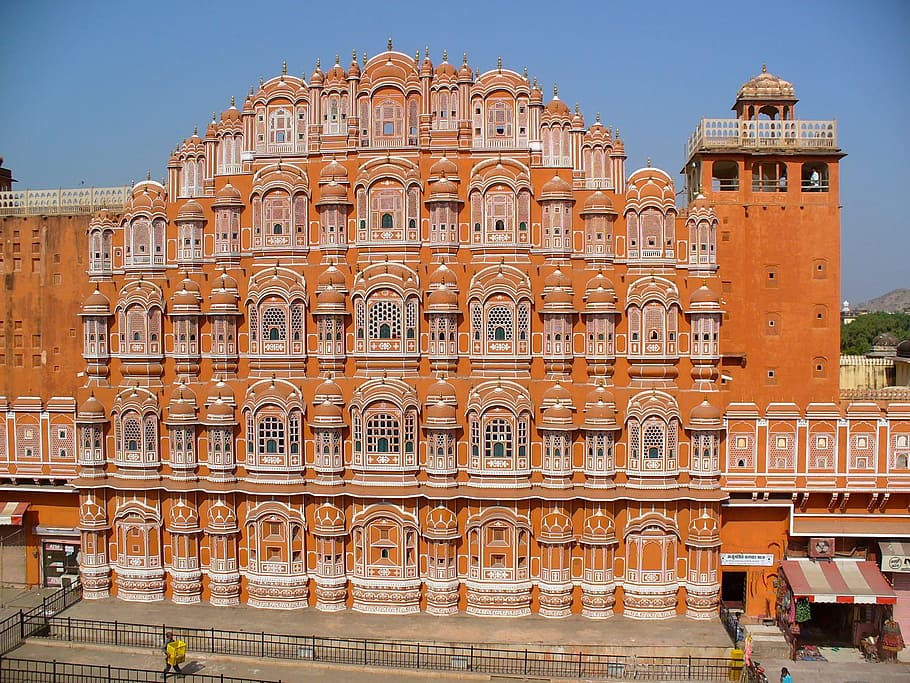
The Palace of Winds, Hawa Mahal, is just a short drive away. It is immediately identifiable by its honeycomb façade, which is decorated with hundreds of exquisite windows. Built to give royal women a behind-the-scenes look at street life, the building is a prime example of both elegance and functionality.
Hawa Mahal looks like an ornate pink sandstone screen that is illuminated by the sun when viewed from the street. Narrow hallways inside lead to tiny rooms and observation decks with views of Jaipur's bustling marketplaces.
The monument's grace is what makes it so appealing. Although it is not as large as City Palace or Amber Fort, its elaborate architecture and symbolic meaning make it unique.
A Taste of Rajasthan During Lunch
Midday demands food and rest. There are many different places to eat in Jaipur, from modern cafés to restaurants with a rich history. The cultural experience is enhanced by sampling Rajasthani food, which reflects the region's culinary character through its rich flavours, fragrant spices, and traditional preparations.
Visitors are exposed to real flavours through well-known meals like Dal Baati Churma, Gatte Ki Sabzi, and Laal Maas. Comfortable substitutes are also available for those who prefer lighter meals or international cuisine.
A leisurely lunch break revitalises your energies and gets you ready for the afternoon's activities.
Albert Hall Museum: Indo-Saracenic Magnificence
The Albert Hall Museum, the oldest museum in Jaipur and a remarkable example of Indo-Saracenic architecture, is frequently included in post-lunch tours. Its elaborate arches, domes, and passageways make a striking impression right away.
Exhibits within are varied and include decorative arts, sculptures, paintings, and textiles. The museum displays Rajasthan's centuries-long artistic legacy, acting as a cultural archive.
The architecture alone makes the visit worthwhile, even for tourists who are not particularly fond of museums. Architectural elegance is embodied in its symmetry and detailing.
Local Markets: Crafts, Culture, and Colours
A automobile tour of Jaipur that doesn't include a visit to the city's vibrant bazaars would be lacking. Markets like Johari Bazaar and Bapu Bazaar are vibrant and lively. The streets are lined with handicrafts, jewellery, textiles, and traditional footwear, all of which highlight Jaipur's artisan history.
Here, shopping becomes into a sensory experience rather than just a business activity. Immersion in local rhythms, artisan observation, and conversations with traders all contribute to a deeper understanding of Jaipur's living culture.
Nahargarh Fort: The Pink City at Sunset
Nahargarh Fort provides a breathtaking finale as the light fades. The fort offers sweeping views of Jaipur from the Aravalli hills, capturing the size and colour of the city.
The landscape changes at sunset. The colours of the sky change significantly, buildings light warmly, and shadows spread softly. Reflection is prompted, enabling travellers to take in the memories of the day.
Comfort and Useful Benefits of Vehicle Tours
Comfort is crucial to a full-day Jaipur exploration's success. A private vehicle reduces physical strain, streamlines logistics, and guarantees protection from severe weather. Skilled drivers travel with ease, and optional guides enhance cultural understanding.
For families, elderly travellers, or people with little time, this kind of ease is priceless. Many travellers prefer experiences like the Full Day Jaipur City Tour by Car – Complete Travel Guide because of the balance between convenience and immersion.
Advice for the Ideal Day Trip to Jaipur
To get the most out of your sightseeing, start early. Put on relaxed attire and shoes. Drink plenty of water and wear sunscreen. Observe historical principles and monument regulations. Make space for impromptu discoveries.
Proper planning transforms a simple trip into a memorable journey. A thoughtfully arranged Full Day Jaipur City Tour by Car – Complete Travel Guide ensures you experience Jaipur without unnecessary stress.
Jaipur's Emotional Worth
Jaipur is felt rather than just seen. Long after leaving, the city's hues, textures, and stories continue to reverberate. Even though one day might not be enough to capture everything, it might spark enduring interest.
A Full Day Jaipur City Tour by Car – Complete Travel Guide offers an ideal gateway into Rajasthan’s royal capital. By combining ease of use with immersion, it makes sightseeing a smooth and unforgettable experience. Few places can match Jaipur's beauty, history, and cultural richness, which are rewarded to every visitor with its magnificent forts and lively markets. For travelers seeking efficiency, comfort, and depth, the Full Day Jaipur City Tour by Car – Complete Travel Guide remains a perfect choice.
FAQs
1. Is a day sufficient to see Jaipur?
Yes, a well-organised full-day tour easily covers the main highlights.
2. Why is a Jaipur automobile tour advised?
It provides efficient transportation between attractions, comfort, and flexibility.
3. When would be the ideal time to begin the tour?
Early morning is best for avoiding crowds and heat.
4. Is a guide required for touring in Jaipur?
Although not required, guides are very helpful for historical context.
5. Is Jaipur a good destination for families?
Indeed, Jaipur offers a wide variety of attractions suitable for all age groups.