Golden Triangle India: The Classic Route That Captures India’s Soul
December 3, 2025
Golden Triangle India: The Classic Route That Captures India’s Soul
Golden Triangle India: The Classic Route That Captures India’s Soul is more than a journey—it's a thorough immersion into India’s heritage, beauty, and soul. Travelers' dreams of India are embodied by this renowned circuit, which includes everything from the colorful chaos and cultural layers of Delhi to the timeless romanticism of Agra and the regal majesty of Jaipur. Golden Triangle India: The Classic Route That Captures India’s Soul stands as the country’s most famous tourist experience because it mixes Mughal elegance, Rajput pride, bustling bazaars, ancient monuments, colorful festivals, and unique flavors into one unforgettable adventure. Travelers seeking history, color, charm, and diversity often find that no other route catches the spirit of India’s centuries-old character as eloquently as this unique triangle.
India's Golden Triangle: An Exploration of History, Tradition, and Culture
When united on a map, the three major cities—Delhi, Agra, and Jaipur—form a triangle that is known as the Golden Triangle. Each site has an own personality, ambiance, and cultural tapestry, giving guests a well-rounded exposure to North India’s most iconic experiences. This is a journey where emperors built astounding wonders, rulers crafted famous forts, poets immortalized love, and artisans created masterpieces that continue to enchant the globe. The Golden Triangle India tour never ceases to inspire, whether you are visiting India for the first time or coming back to explore its deeper aspects.
DELHI: A CITY WHERE WORLDS COLLIDE—ANCIENT, MEDIEVAL & MODERN
Delhi, the nation’s capital, is an exciting blend of the ancient and the new. It is one of the world’s oldest continually inhabited cities, having a history extending back over 5,000 years. The Golden Triangle often begins here because Delhi introduces guests to India in the most exciting way possible.
Old Delhi: The Historical Heartbeat
Old Delhi, founded by Mughal Emperor Shah Jahan in the 17th century, is a dense tapestry of narrow streets, scented food stalls, and time-worn buildings. Visiting Old Delhi is like stepping into a living museum, where traditions flourish and every corner tells a tale.
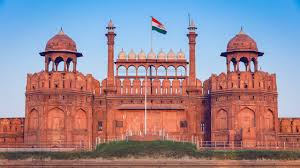
Red Fort: A UNESCO World Heritage Site, this imposing red sandstone stronghold was Shah Jahan’s residence and the heart of Mughal rule. Its walls stretch over 2 kilometers, and inside lay pavilions, gardens, and halls filled with Mughal magnificence.
Jama Masjid: One of India’s largest mosques, capable of holding 25,000 people. The mosque’s marble domes, towering minarets, and spacious courtyard exemplify harmony and peace.
Chandni Chowk: A bustling bazaar that has been thriving for centuries. Spices, jewels, textiles, fragrances, and candies are all sold by wholesalers here. The aroma of parathas, jalebi, and biryani permeates the air, making this a sensual feast.
Raj Ghat: A peaceful memorial dedicated to Mahatma Gandhi.
This area of Delhi offers a stunning view into India’s live traditions—chaotic yet beautiful, old yet evergreen.
New Delhi: The Architectural Poetry of Modern India
New Delhi was created by British architects Edwin Lutyens and Herbert Baker during colonial rule. With its wide boulevards, formal gardens, and imposing government buildings, it stands in stark contrast to Old Delhi.
India Gate: A war memorial remembering Indian soldiers who perished during World War I.
Rashtrapati Bhavan: Official residence of the President of India.
Humayun’s Tomb: A UNESCO World Heritage Site and the architectural forerunner to the Taj Mahal.
Qutub Minar: Constructed in 1193, it is the world's highest brick minaret.
New Delhi symbolizes India’s prosperity, modernity, and global aspirations. Together, Old and New Delhi create a dynamic combination that sets the tone for the rest of the Golden Triangle India journey—a blend of heritage and transformation.
AGRA: THE HOME OF THE ETERNAL LOVE SYMBOL
After Delhi, people head southeast to Agra, the city that hosts the world’s most iconic monument—the Taj Mahal. But Agra offers much more: vestiges of Mughal grandeur, superb workmanship, and a cultural tradition that continues to amaze.
The Taj Mahal: An Incomparable Masterpiece
No matter how many times one views the Taj Mahal, its magnificence feels new and overwhelming. This ivory-white marble monument, constructed by Emperor Shah Jahan in honor of his cherished wife Mumtaz Mahal, is the ideal fusion of design, artistry, and feeling.
Perfect symmetry in every arch and minaret.
Marble that changes color with the sun—rosy at dawn, white at midday, golden under moonlight.
Inlay art with semi-precious stones forming shimmering floral designs.
Synchronized perspectives where the Taj seems identical from every angle.
A love story preserved in stone.
The Taj Mahal appears ethereal—almost floating—whether viewed at sunrise, sunset, or under a full moon.
Agra Fort: Power, Politics & Prestige
Agra Fort, a red sandstone UNESCO landmark, served as the Mughal empire's capital prior to Delhi. Exquisite architecture can be found inside palaces such as Sheesh Mahal, Diwan-i-Khas, Khas Mahal, and Jahangir Mahal.
Mehtab Bagh: The Garden of Moonlight
Located across the Yamuna River, this garden provides one of the best views of the Taj Mahal. At dusk, the Taj glows beautifully from this vantage point, making it a paradise for photographers.
Itmad-ud-Daulah's Tomb (Baby Taj)
This graceful white marble tomb is often overshadowed by the Taj Mahal, yet it is believed to be the first Mughal monument built entirely of marble. It introduced the inlay techniques later used in the Taj.
Agra is not only about monuments—it's about craftsmanship and legacy. Its ancient essence is enhanced by the charm of marble workshops, leather markets, and petha sweet shops.
JAIPUR: RAJASTHAN'S ROYAL PINK CITY
Jaipur, the third point of the Golden Triangle, is a celebration of Rajput sovereignty, the allure of the desert, and magnificent architecture. Known as the Pink City for its distinctive terracotta buildings, Jaipur radiates color, culture, and personality.
Amber Fort: Rajput Magnificence on a Hilltop
Amber Fort (Amer Fort) is a large palace complex composed of sandstone and marble. It rises above Maota Lake and features Sheesh Mahal, Ganesh Pol, Zenana courtyards, and dramatic Sound & Light Shows narrating Jaipur’s history.
City Palace: Home of Jaipur's Royal Family
City Palace blends Mughal and Rajput styles and remains the residence of Jaipur’s royal family. Its museums display royal costumes, weapons, and artifacts.
Hawa Mahal: The Palace of Winds
This five-story honeycomb façade with 953 windows was built so royal women could watch street life unseen. It remains Jaipur’s most iconic architectural symbol.
Jantar Mantar: Astronomy in Stone
This UNESCO-listed observatory features enormous instruments capable of predicting eclipses, mapping stars, and measuring time with striking precision.
Local Life & Culture of Jaipur
Handicrafts, blue pottery, block printing, gemstone markets, Rajasthani cuisine, and folk dance performances make Jaipur a vibrant cultural experience.
A CLOSER LOOK: WHY INDIA'S SOUL IS CAPTURED BY THE GOLDEN TRIANGLE
Each city in the Golden Triangle reflects a different facet of India’s identity:
Delhi: Diversity, complexity, and timeless continuity.
Agra: Love, beauty, and Mughal refinement.
Jaipur: Royalty, courage, and vibrant traditions.
Together, they form a complete journey through history, architecture, culture, cuisine, and emotion.
CULTURE, FOOD & EXPERIENCES THAT DEFINE THE GOLDEN TRIANGLE
Food Experiences
Delhi: kebabs, chole bhature, parathas
Agra: petha, Mughlai cuisine
Jaipur: dal baati churma, laal maas, ghewar
Shopping
Delhi: textiles, spices, jewelry
Agra: marble inlay work, leather goods
Jaipur: gemstones, handicrafts, block-printed textiles
Festivals
Depending on the season, travelers can witness Holi, Diwali, Teej, kite festivals, and more—each adding vibrant energy to the journey.
A JOURNEY THROUGH ARCHITECTURE & ART
The Golden Triangle is a treasure trove of architectural brilliance:
Mughal: Red Fort, Taj Mahal
Rajput: Amber Fort, Hawa Mahal
Colonial: India Gate, Connaught Place
From marble to sandstone, from domes to jharokhas, every structure tells a story.
TRAVEL COMFORT & MODERN LUXURY
Today’s travelers enjoy:
Heritage hotels & luxury stays
Expressways & fast trains like Gatimaan Express
Private guided tours
Cooking workshops & cultural shows
Hot air balloon rides in Jaipur
This blend of heritage and comfort enhances the Golden Triangle experience.
THE GOLDEN TRIANGLE INDIA EXPERIENCE
Golden Triangle India: The Classic Route That Captures India’s Soul is not just a tour—it is a revelation. It reflects the rhythm of India’s past, the pulse of the present, and the promise of the future. It is where travelers feel the romance of the Taj Mahal, the grandeur of Rajput palaces, and the vibrancy of Delhi’s living legacy.