In the Eternal City: A Journey Through Varanasi
December 24, 2025
In the Eternal City: A Journey Through Varanasi
Varanasi is not a city you simply visit. It is a city you experience, absorb, struggle to understand, and eventually surrender to. Known as Kashi, Banaras, and Varanasi, this ancient settlement on the banks of the sacred Ganges is believed to be one of the oldest continuously inhabited cities in the world. Time here does not move in a straight line; it coils, loops, and dissolves into rituals, chants, smoke, and flowing water.
This is a journey through Varanasi — not just through its narrow lanes and ghats, but through its philosophy, contradictions, spirituality, chaos, beauty, and profound humanity.
The Myth and Meaning of the Eternal City
According to Hindu mythology, Varanasi was founded by Lord Shiva himself. It is said that the city rests on the trident of Shiva, untouched by destruction, even when the universe dissolves. To die in Varanasi is believed to grant moksha—liberation from the cycle of birth and death. This belief has drawn pilgrims, seekers, saints, and wanderers here for thousands of years.
But Varanasi is not frozen in myth. It breathes, evolves, and survives in the present. It is ancient, yet startlingly alive.
First Impressions: Chaos as a Language
Your first encounter with Varanasi can be overwhelming. The honking traffic, sacred cows blocking roads, priests chanting mantras, vendors shouting prices, incense smoke mingling with the smell of street food and river water—it all collides at once.
The city does not introduce itself gently. It demands attention.
Auto-rickshaws squeeze through impossibly narrow lanes. Temple bells ring incessantly. Sadhus with ash-smeared faces sit silently amid the noise. Every corner seems to hold a story, every sound a prayer.
And slowly, amid the chaos, you realize something profound: this disorder has its own rhythm. Varanasi does not rush. It flows.
The Ghats: Stone Steps into Eternity
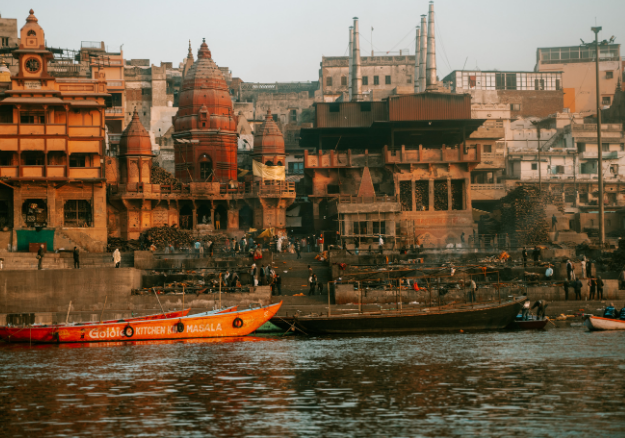
The heart of Varanasi lies along the Ganges, where over 80 ghats line the riverbank. These stone steps are far more than architectural structures—they are stages of life itself.
Dashashwamedh Ghat
The most vibrant and iconic ghat, Dashashwamedh is where devotion takes center stage. At sunrise, pilgrims take ritual dips in the river. At sunset, the famous Ganga Aarti unfolds—priests synchronizing movements with fire lamps, bells, conch shells, and Vedic chants.
The aarti is not a performance—it is a conversation between humans and the divine.
Manikarnika Ghat
This is where life confronts death directly. One of the main cremation ghats, Manikarnika burns day and night. Funeral pyres crackle, bodies wrapped in cloth are carried in solemn processions, and ashes merge with the Ganges.
Death in Varanasi is not feared; it is honored as a transition. Watching cremations may feel unsettling at first, but soon you sense the city’s radical honesty about impermanence.
Assi Ghat
At the southern end lies Assi Ghat, calmer and popular with students, travelers, and locals alike. Morning yoga sessions, classical music performances, and quiet prayers make it a space of reflection.
A Boat Ride at Dawn: When the City Awakens
One of the most unforgettable experiences in Varanasi is a sunrise boat ride on the Ganges. As the sky turns shades of orange and pink, the ghats come alive.
Life, devotion, and death coexist effortlessly. From the water, Varanasi feels eternal. The temples rise like guardians. The chants echo softly. The river glides on, indifferent yet sacred.
Temples and Faith: The Pulse of Devotion
Kashi Vishwanath Temple
Dedicated to Lord Shiva, this is one of the holiest shrines in Hinduism. A visit here is not about architectural beauty; it is about surrender.
Sankat Mochan Hanuman Temple
Known for its peaceful energy, this temple is dedicated to Lord Hanuman and attracts locals seeking relief from troubles.
Hidden Shrines
Beyond famous temples, Varanasi is filled with countless small shrines tucked into alleys, corners, and courtyards.
The Lanes of Banaras: Where Stories Live
The true soul of Varanasi is found in its galis—the narrow lanes winding endlessly through the old city.
Banarasi Silk: Threads of Heritage
Banarasi silk sarees are among India’s finest textiles, known for their intricate zari work and royal elegance.
Food in Varanasi: Sacred and Street-Side
Street Delights
Kachori Sabzi, Tamatar Chaat, spicy chaat, and thick earthen-pot lassi define Banaras street food.
Traditional Flavors
Banarasi Thali and Malaiyo reflect the city’s culinary heritage.
Music, Literature, and Learning
Varanasi has been a cradle of Indian classical music and literature, nurturing legends and traditions that continue today.
Contradictions That Define Varanasi
Varanasi embraces paradox—spirituality and chaos, life and death, silence and noise.
Lessons from the Eternal City
Varanasi teaches acceptance, humility, and the courage to live fully.
Leaving Varanasi, Carrying It Within
When you leave Varanasi, the city does not leave you. In the Eternal City, you do not find answers—you find yourself.