Taj Mahal: The Eternal Symbol of Love
September 24, 2025
Introduction
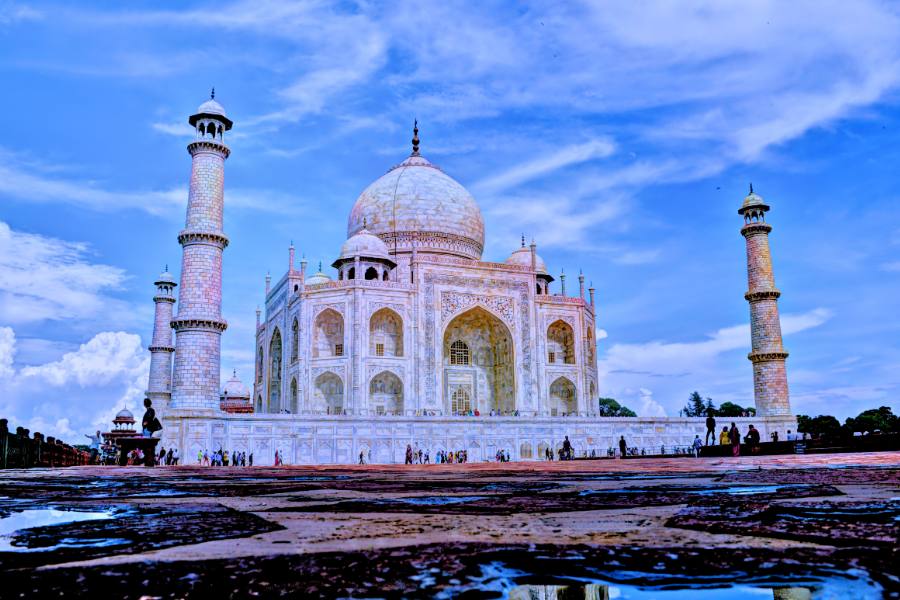
If love were a monument, it would be the Taj Mahal. Standing majestically on the banks of the Yamuna River in Agra, India, this architectural marvel is more than just a piece of history; it is a timeless story sculpted in white marble. For generations, travelers, poets, and lovers have been enchanted by its beauty, hailing it as the eternal symbol of love.
The Historical Background
The Taj Mahal story begins during the golden phase of the Mughal Empire. Emperor Shah Jahan, noted for his magnificence, had a close relationship with his cherished wife, Mumtaz Mahal. Their love was legendary, so when Mumtaz died after childbirth in 1631, Shah Jahan's world fell apart. Out of his sadness arose one of humanity's greatest monuments: the Taj Mahal.
Construction of the Taj Mahal
This was not a project that was accomplished overnight. The Taj Mahal took 22 years, from 1632 to 1653, to complete. Over 20,000 artisans from India, Persia, and elsewhere worked ceaselessly. White marble was brought from Rajasthan; jasper from Punjab; jade from China; and turquoise from Tibet. It was truly a global effort, exemplifying both human passion and artistic genius.
Architectural Grandeur
The Taj Mahal is a unique combination of Mughal, Persian, and Indian architecture. Its design is a masterpiece of symmetry, with each corner matching the other. The centerpiece, the mausoleum, is built of gleaming white marble that appears to change colors depending on the light.
The Central Dome and Minarets
The onion-shaped dome, approximately 240 feet tall, dominates the skyline. Four minarets surround it, slightly inclined outward to safeguard the tomb from collapse in the event of an earthquake—a brilliant technical decision that was made centuries before its time.
Intricate Inlay and Calligraphy
The Taj Mahal exposes a new world as you approach it. Semi-precious stones like lapis lazuli, sapphire, and onyx are used to embellish the surface in delicate floral designs. Quranic words are engraved into the marble in flawless calligraphy, encouraging visitors to contemplate life, death, and eternity.
Symbols of Eternal Love
The Taj Mahal is more than just an architectural marvel; it's a message in stone. Shah Jahan envisioned it as a physical representation of his love for Mumtaz. Every arch, flower, each piece of marble expresses devotion. It is eternal love: unchangeable, immortal, and pure.
Changing Colors of the Taj Mahal
One of the most enchanting elements of the Taj Mahal is the way it changes hues throughout the day. It blushes pink at daybreak, dazzling white at noon, and soft golden blue under moonlight. This continual metamorphosis is interpreted as a metaphor for love's various emotions and stages.
The Gardens of Paradise
The mausoleum is surrounded by finely constructed Charbagh gardens separated into four quadrants by water channels. This pattern represents paradise as depicted in Islamic tradition: lush, symmetrical, and tranquil.
The Yamuna River Reflection
The Taj's location near the Yamuna River was not coincidental. The running waterways reflect the monument magnificently, giving a mirror-like effect that magnifies its size. It's no surprise that photographers all over the world want to capture this beautiful sight.
Challenges and Preservation Efforts
Unfortunately, time has not been kind to the Taj. Pollution, acid rain, and river erosion all produced coloring and destruction. To conserve this jewel for future generations, authorities have initiated preservation campaigns, limited surrounding industries, and imposed environmentally friendly policies.
UNESCO World Heritage Recognition
In 1983, UNESCO designated the Taj Mahal as a World Heritage Site, describing it as "the jewel of Muslim art in India." This status cemented its position as not only India's pride, but also a human treasure.
The Taj Mahal and Popular Culture
From Bollywood romance to Hollywood films, poetry to music, the Taj Mahal continues to inspire artists all over the world. It's more than just a monument; it's a muse that inspires creativity.
Visit the Taj Mahal
Planning a trip? The best months to visit are October through March, when the weather is agreeable. Sunrise and sunset visits are particularly spectacular. Do not miss adjacent attractions such as Agra Fort and Fatehpur Sikri, which will give dimension to your journey.
Lesser-Known Facts about the Taj Mahal
Did you know Shah Jahan had a fantasy of building a Black Taj Mahal across the Yamuna for himself? Or that artisans' hands were rumored to be severed to preserve the uniqueness of their creations? While these are legends, they contribute to the monument's mystery.
The Taj Mahal is more than just stone and marble; it represents an emotion etched into history. It serves as a reminder that real love can transcend time, location, and even death. For generations to come, it will be not only India's crown gem, but the world's immortal symbol of love.