What Is the Best Taj Mahal Tour from Delhi by Car?
September 21, 2026
What Is the Best Taj Mahal Tour from Delhi by Car?
Planning a day trip from Delhi to Agra sounds simple until you start thinking about the details. When should you leave? How much time should you spend at the Taj Mahal? Should you visit Agra Fort too? Is a sedan comfortable enough, or is an SUV better for a family? A private car answers many of these questions because it gives you control over the journey rather than tying your day to a fixed public-transport schedule. Agra is approximately 222–243 kilometres from Delhi depending on the route, and the Government of India’s tourism website says the road journey can take up to about four and a half hours. For travellers who want to see the Taj Mahal and return to Delhi on the same day, a carefully planned Taj Mahal Tour from Delhi by car can be an efficient and comfortable option. The experience becomes even better when you choose an early departure, allow enough sightseeing time, and avoid trying to squeeze too many attractions into one day.
Why Choose a Private Car for a Delhi to Agra Trip?
The biggest advantage of travelling by private car is flexibility. You are not simply buying transportation from one city to another; you are creating a sightseeing day around your own schedule. You can be picked up directly from your Delhi hotel, airport-area accommodation, home, or another agreed location, travel straight toward Agra, and make reasonable stops along the way if required. For couples, families, senior travellers, and small groups, this door-to-door arrangement can be considerably easier than coordinating multiple transfers. The Yamuna Expressway provides a convenient road connection between Delhi and Agra, although actual travel time depends on your starting point in Delhi, traffic, weather, road conditions, and the timing of your trip.
A private car also makes it easier to keep your day relaxed. Imagine having a small personal travel bubble where your bags remain safely inside the vehicle while you explore the monuments. After several hours of walking around historic sites, you can return to an air-conditioned vehicle instead of navigating a busy station or waiting for another connection. You can also discuss the day's sequence with your driver before beginning the tour. This matters because sightseeing in Agra involves more than simply reaching the Taj Mahal. Parking arrangements, restricted vehicle zones around the monument, entrance gates, security checks, and the distance between attractions all influence how smoothly your day works. A good private-car itinerary takes these practical details into account rather than treating the journey as a simple Delhi-to-Agra transfer.
How Far Is Agra from Delhi by Road?
The road distance between Delhi and Agra varies according to the starting point and route. The Government of India’s tourism information places the distance at approximately 222 to 243 kilometres and states that Agra can be reached from Delhi in up to around four and a half hours. The Yamuna Expressway is one of the principal routes used by travellers going between the two cities, and it is particularly useful for visitors planning a same-day excursion. The journey is much more than a number on a map, though. Leaving Delhi during a busy period can change your arrival time considerably, which is why early departures are generally useful when you want to maximize sightseeing time in Agra.
For a one-day itinerary, leaving Delhi early is usually the practical approach. If you want to experience the Taj Mahal in the morning, you should build the schedule around its opening time rather than treating the monument as a late-morning stop. The official Taj Mahal website currently states that the monument opens 30 minutes before sunrise and closes 30 minutes before sunset on normal operating days. It also confirms that the Taj Mahal is closed to general visitors every Friday. Because sunrise changes throughout the year, the ideal departure time from Delhi also changes seasonally. A tour operator promising exactly the same pickup time throughout the year may not be giving you the most practical itinerary for every season.
What Does the Ideal One-Day Tour Include?
The classic private-car itinerary usually focuses on the Taj Mahal and Agra Fort. This combination works particularly well because the two monuments provide very different experiences. The Taj Mahal is famous for its white marble architecture, symmetry, gardens, and association with Shah Jahan and Mumtaz Mahal, while Agra Fort gives visitors a broader understanding of Mughal imperial architecture and the history of Agra. Agra Fort and other heritage attractions can easily complement a Taj Mahal visit. Trying to visit every attraction in the city during one day, however, can turn a pleasant excursion into a race against the clock.
A sensible itinerary normally gives the Taj Mahal priority, followed by Agra Fort and lunch. Depending on your interests and available time, you can then add another nearby attraction such as Itimad-ud-Daulah, Mehtab Bagh, or a short local shopping stop. The important thing is to choose rather than collect. Seeing three places properly is often more enjoyable than visiting six places for ten minutes each and spending the rest of the day watching the clock.
Visiting the Taj Mahal
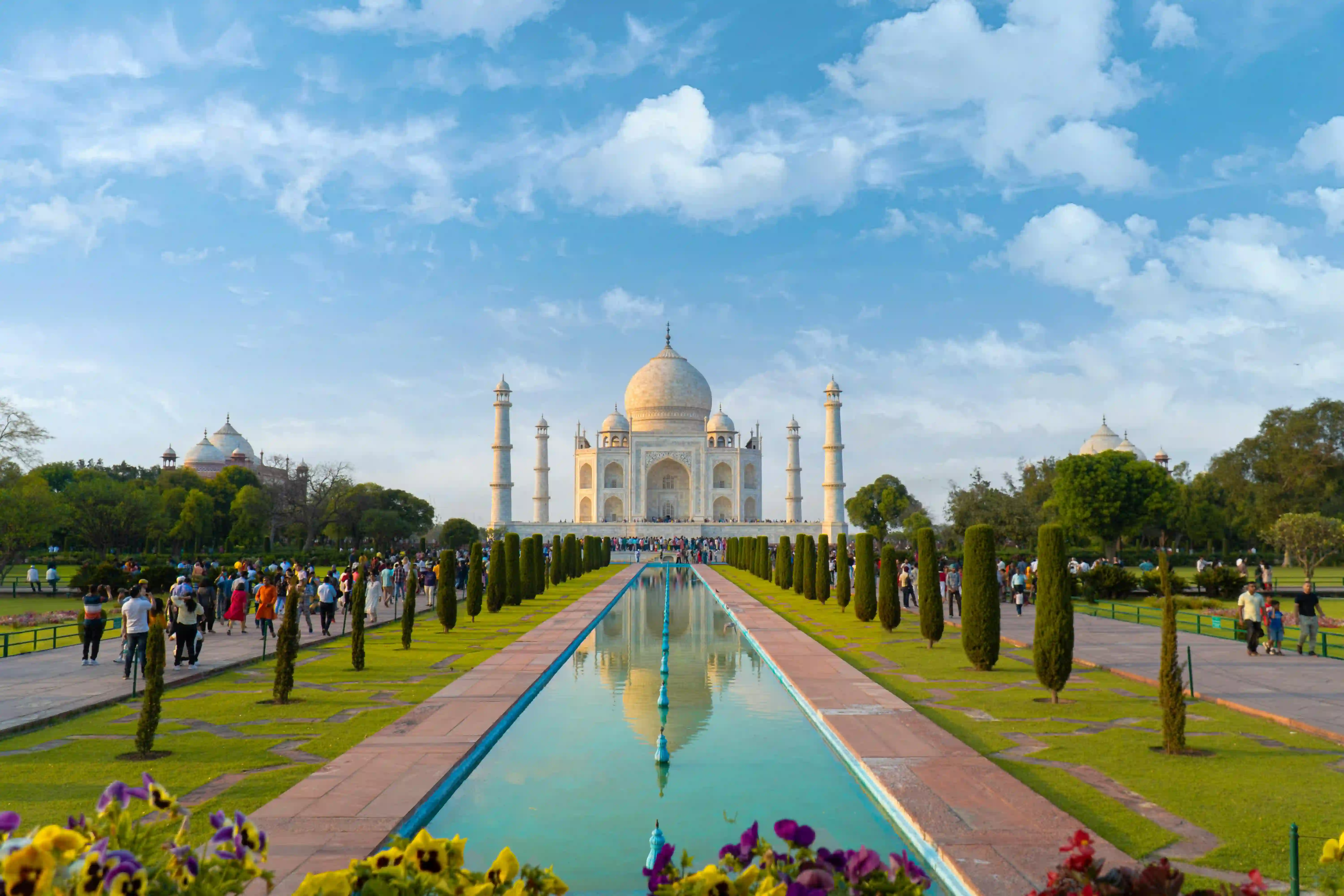
The Taj Mahal should normally be the centerpiece of your day. The official website confirms that regular visiting hours extend from 30 minutes before sunrise until 30 minutes before sunset, except for the Friday closure. Early morning is preferred by many visitors because the monument's appearance changes with the light and morning conditions can be more comfortable. This is especially relevant if photography is important to you. Morning light can create a softer atmosphere around the marble, while the gardens and reflecting pool provide the familiar views most travellers hope to capture.
There are also practical rules to remember. Drones are prohibited, eating and smoking are prohibited inside the Taj Mahal, and visitors should avoid carrying large bags because they can increase security-check time. Photography is also prohibited inside the main mausoleum. Planning around these restrictions makes the entrance process easier. Keep your essentials limited, carry the required identification, and follow the instructions of the monument authorities and security personnel. A little preparation before reaching the gate can save considerably more time than trying to organize everything after you arrive.
Exploring Agra Fort
Agra Fort is a natural second stop because it adds historical depth to the Taj Mahal experience. Instead of seeing the Taj Mahal as an isolated monument, visitors can learn more about the Mughal imperial environment by walking through the fort's courtyards, halls, gates, and palace areas. Agra Fort is generally open from sunrise to sunset, making it practical to combine with the Taj Mahal during a private-car day trip.
The contrast between the two sites is part of the appeal. At the Taj Mahal, the dominant impression is symmetry, white marble, gardens, and refined ornamentation. At Agra Fort, the architecture feels more defensive and monumental, reflecting its role as a major imperial complex. Spending time at both gives you two different perspectives on Mughal-era Agra. If you have limited time, you do not need to spend an entire afternoon inside the fort; a focused visit can fit naturally into a well-organized day.
What Is the Best Time to Leave Delhi?
For most travellers, an early start is the most sensible strategy. The earlier you reach Agra, the more time you have for the Taj Mahal, Agra Fort, lunch, and any optional attraction. An early departure can also help you avoid some of the heavier traffic that develops later in the day. More importantly, if your objective is a morning Taj Mahal visit, you need to work backward from sunrise and the official opening window rather than simply choosing an arbitrary Delhi pickup time.
Your departure time should also reflect the season. During winter, sunrise occurs later than during summer, while summer temperatures can become uncomfortable as the day progresses. Early morning is a popular visiting period because temperatures can be more pleasant and the atmosphere can be calmer. For that reason, a sunrise-focused itinerary can be especially attractive when temperatures are high or when photography is one of your priorities.
Avoid scheduling your day so tightly that a traffic delay ruins the entire plan. Road travel is never a stopwatch exercise. A better itinerary includes reasonable flexibility, allowing additional time for unexpected traffic, security queues, parking transfers, and lunch. Your goal should be to enjoy Agra rather than spend the entire journey calculating whether you are five minutes behind schedule.
Which Car Should You Choose?
The right vehicle depends mainly on your group size, luggage, comfort expectations, and budget. A sedan can be perfectly suitable for a couple or a small group travelling light. It generally offers a comfortable private environment without requiring the larger footprint of an SUV. Families carrying additional luggage or travellers who simply prefer more cabin space may find an SUV more convenient. If you are celebrating a special occasion or want a premium experience, a luxury vehicle can turn the road journey into part of the experience rather than merely a means of reaching Agra.
| Vehicle Type | Suitable For | Main Advantage |
|---|---|---|
| Sedan | Couples and small groups | Comfortable and economical |
| SUV | Families and small groups | More space and luggage capacity |
| Luxury Car | Premium or special occasions | Higher-end comfort and experience |
Do not choose a vehicle based only on its name. Ask what is actually included in the tour package. Important questions include whether fuel, tolls, parking charges, driver expenses, pickup and drop-off, and waiting time are included. You should also confirm whether the quoted price is for the entire vehicle or per person. A low headline price can become considerably different after additional charges are added. Transparency matters just as much as the vehicle itself.
What Does a Typical Tour Cost?
There is no single universal price for a private Delhi-to-Agra car tour because the final amount depends on several variables. Vehicle category, travel date, number of passengers, pickup location, inclusions, guide services, meals, and optional attractions can all change the price. A sedan for two travellers will naturally have a different cost structure from a premium SUV for a larger family. Similarly, a basic transportation package will not cost the same as a package that includes a private guide, monument tickets, meals, and additional sightseeing.
Entrance tickets should also be considered separately when comparing packages. Monument admission prices can vary according to visitor category and the areas included in the ticket. Travellers should check the latest official Taj Mahal ticket information before their visit because fees and entry conditions can change. These are monument admission charges, not the price of a private car tour itself, so travellers should read the inclusions carefully before booking.
When comparing packages, look beyond the headline price. A slightly different quote may include highway tolls, parking, driver allowance, hotel pickup, and a professional guide, while a cheaper-looking quote might cover transportation only. The easiest way to compare is to request a complete list of inclusions and exclusions before confirming. This prevents the classic travel surprise where the advertised price looks attractive but several necessary costs appear later.
How to Plan Your Day in Agra
A practical one-day schedule might begin with an early morning pickup from Delhi, followed by the drive to Agra and the Taj Mahal visit. After exploring the monument and gardens, you can continue to Agra Fort, take a lunch break, and then choose one additional attraction if your schedule allows. The final portion of the day is reserved for the return drive to Delhi. The exact timings should remain flexible because sunrise, traffic, security queues, and the pace of your sightseeing will vary.
- Early morning: Pickup from your Delhi hotel or chosen location.
- Morning: Drive to Agra via the Yamuna Expressway.
- Morning sightseeing: Visit the Taj Mahal.
- Late morning or midday: Explore Agra Fort.
- Afternoon: Lunch and optional sightseeing.
- Late afternoon: Begin the drive back to Delhi.
- Evening: Drop-off at your hotel, residence, or agreed location.
This structure works because it gives priority to the experience that most people are travelling to Agra to see. It also leaves some room for the unexpected. Maybe you want ten extra minutes at a particular viewpoint. Perhaps your family needs a longer lunch. Maybe traffic affects the journey. A good itinerary should bend a little rather than break when the day does not unfold perfectly.
Should You Hire a Tour Guide?
A guide is optional, but it can change the way you experience the monuments. Without a guide, you can appreciate the architecture, walk through the complex, take photographs where permitted, and read available information. With a knowledgeable guide, you can gain additional context about Mughal history, architectural details, symbolism, construction techniques, and the stories associated with the monuments.
If you decide to hire a guide, use an approved or properly identified guide. Official Taj Mahal visitor guidance advises tourists to hire approved guides and photographers who display their identity cards. This is a simple precaution that can make your sightseeing experience more comfortable. A good guide should explain the monument without turning the visit into a hurried sales tour.
Tips for a Smooth Taj Mahal Visit
Small preparations can make a surprisingly large difference. First, check the operating day before booking because the Taj Mahal is closed to general visitors every Friday. Second, check the expected sunrise and sunset for your travel date so that your departure plan matches the monument's visiting window. Third, purchase or arrange tickets through official channels and understand whether your ticket includes access to the main mausoleum, since that may require an additional ticket.
Pack lightly. Large bags can increase security-check time, while items such as drones, food, smoking materials, and several other objects may be prohibited. Comfortable walking shoes are also useful because sightseeing involves walking through large heritage complexes. Keep your identification available, carry a small water bottle where permitted, and follow the latest instructions from the monument authorities.
Another useful tip is to avoid putting too many destinations into a one-day trip. Agra has enough attractions to justify several days, but a Delhi day trip has natural time limitations. If the Taj Mahal and Agra Fort are your priorities, make those the anchors of the itinerary. You can add another attraction only if the schedule comfortably permits it. This approach produces a much more enjoyable experience than racing from one monument to another.
Is a Private Car Tour Worth It for Families?
For families, the private-car format can be particularly convenient because the journey is customizable. Parents can keep snacks and luggage in the vehicle, children do not have to repeatedly change transportation, and the group can travel together from pickup to drop-off. Older family members can also avoid unnecessary transfers between stations, vehicles, and local transport. These practical benefits can be more important than simply saving a small amount on transportation.
The same applies to couples and small groups. A private vehicle gives you privacy and allows you to decide how much time to spend at each location. If you are celebrating an anniversary, birthday, honeymoon, or another special occasion, you can also upgrade the vehicle or arrange additional services. The road journey becomes part of the trip rather than a logistical obstacle between Delhi and Agra.
What Makes the Best Tour Different?
The best tour is not necessarily the one with the longest list of attractions or the lowest advertised price. It is the one where the schedule makes sense, the vehicle suits the group, the inclusions are transparent, and there is enough time to actually enjoy the monuments. For most first-time visitors, the combination of the Taj Mahal and Agra Fort provides a strong foundation. Optional additions can then be selected according to personal interests.
A reliable Taj Mahal Tour from Delhi should also clearly explain pickup arrangements, vehicle type, approximate journey duration, monument tickets, guide availability, meals, parking, tolls, and return arrangements. The traveler should know what is included before getting into the car. When these details are clear, the day becomes much easier to manage.
Conclusion
A private car is a practical way to experience Agra from Delhi in a single day, particularly when flexibility and comfort matter. The journey can be organized around an early Taj Mahal visit, followed by Agra Fort, lunch, optional sightseeing, and a return to Delhi. Current official information confirms that the Taj Mahal normally opens 30 minutes before sunrise and closes 30 minutes before sunset, while Fridays remain the regular weekly closure day. Agra is reachable from Delhi by road through routes including the Yamuna Expressway, making a same-day visit possible with thoughtful planning.
For travellers comparing options, focus on the complete experience rather than the advertised price alone. Choose a vehicle that fits your group, leave Delhi early, confirm what your package includes, keep your itinerary realistic, and check official monument information before travelling. With those basics in place, a Taj Mahal Tour from Delhi can be more than a quick sightseeing excursion—it can become a comfortable introduction to one of India's most remarkable heritage cities.
FAQs
1. Can I visit the Taj Mahal from Delhi and return on the same day?
Yes. A same-day road trip is possible, and private cars make the schedule easier to customize. Because the road journey can take several hours each way, starting early is important if you want enough time for the Taj Mahal and Agra Fort. A well-organized Taj Mahal Tour from Delhi can combine transportation and sightseeing into one convenient itinerary.
2. Is the Taj Mahal open every day?
The Taj Mahal is generally open from 30 minutes before sunrise until 30 minutes before sunset, but it is closed to general visitors every Friday. Always check the official information for your specific travel date before departing.
3. How much time should I spend at the Taj Mahal?
Many visitors should allow roughly two to three hours for the Taj Mahal complex, depending on walking pace, photography, crowds, security procedures, and whether they enter the main mausoleum. An early visit can help you make better use of the day.
4. Can I include Agra Fort in the same trip?
Yes. Agra Fort is one of the most practical additions to a one-day Agra itinerary. Its historical importance and location make it a natural companion to the Taj Mahal, especially when travelling by private car.
5. What should I look for when booking a car tour?
Check the vehicle type, pickup and drop-off locations, tolls, parking, driver charges, fuel, monument tickets, guide services, meals, and any additional sightseeing included in the price. A clear list of inclusions helps you compare tour packages accurately and avoid unexpected charges. Before booking your Taj Mahal Tour from Delhi, confirm all inclusions and exclusions with the tour provider.